

As we pursue excellence in the liberal arts and in graduate and professional education, classroom conditions must reflect the current trends in IT and teaching spheres. In response to the demand to modernize existing classrooms and learning spaces across campus, Information Systems partnered with Learning Spaces (LS) to provide data-driven renovations of existing classroom as well as technology suggestions for future learning spaces. Within IS, many of these improvements were in the realm of accessible teaching tools. While Wake Forest is not a hybrid institution of learning, having space for visual collaboration, visiting faculty, and guest lectures has become essential after the pandemic.
IS understands the importance of technology in the classroom. We need stability in our classroom design as well as responsiveness and functionality. All these improvements require efficiencies to support the demand and mission of the college. As we work to support faculty and their instruction, we are committed to using data to inform how we support professors in their pedagogy.
When began our refresh journey in 2015, over 90 classrooms were over 15 years old. We collected data from spaces that were being used, and surveyed faculty asking, “how can we do better and make this more efficient and pleasant for you?” rather than suggesting improvement without context. While we lost two years to COVID-19 during our enhancement process, currently in 2022, only 12 classes remain that require a refresh. Learning spaces are the priority in our refresh process and we always think “classroom first” when solving issues at hand, committing ourselves to making the student experience better.
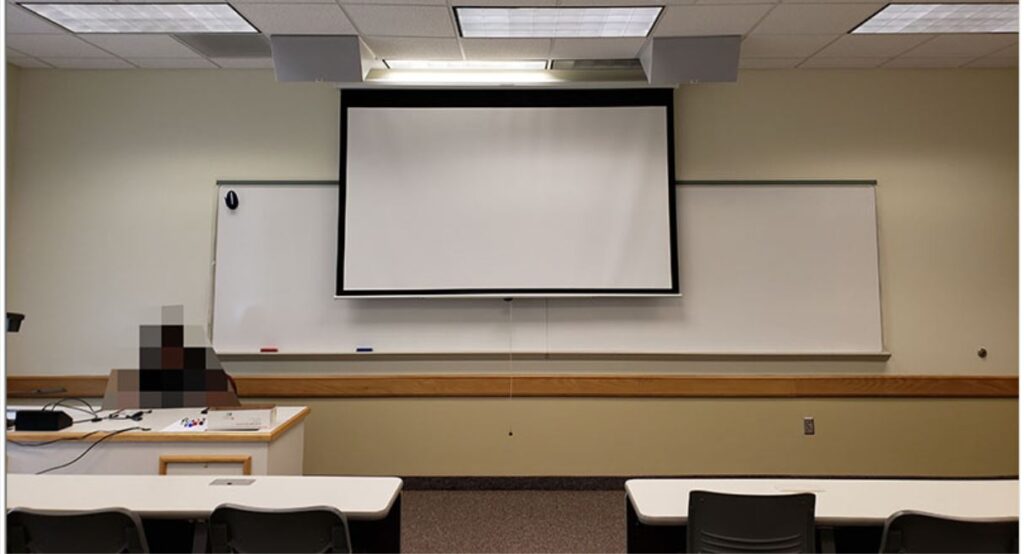
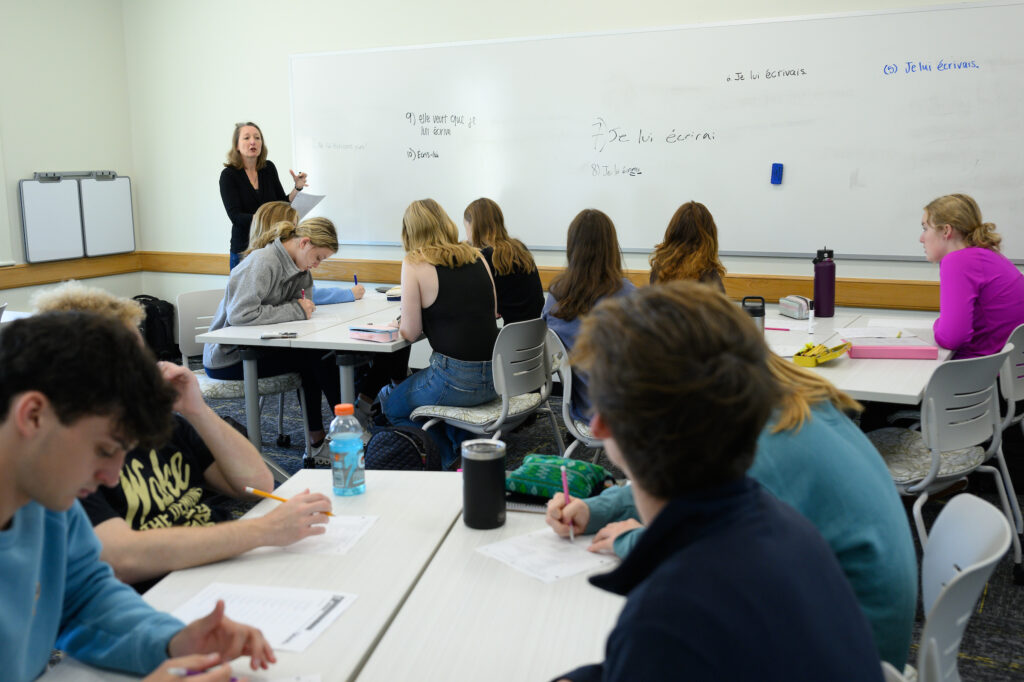
Refreshes address issues of accessibility as well. In many classrooms, fixed furniture and chairs were attached to non flexible desks. These offered poor space for writing, limited mobility, and limited movement range needed for activity. We also addressed issues of sight lines. A traditional classroom may have one board which limits student interaction and visibility access. Refreshed classrooms now have three boards that support active learning and accessibility. While working through the needs that were changing and adapting within classroom refreshes, we focused on simple control solutions that offered elegant systems that allow for teachers to wirelessly share content and be free to move about the space.
As we move forward with Classroom refreshes, we are excited to continue working with teachers with data driven results as we support them in their teaching excellence.