

7 Things to know about Museum in a box
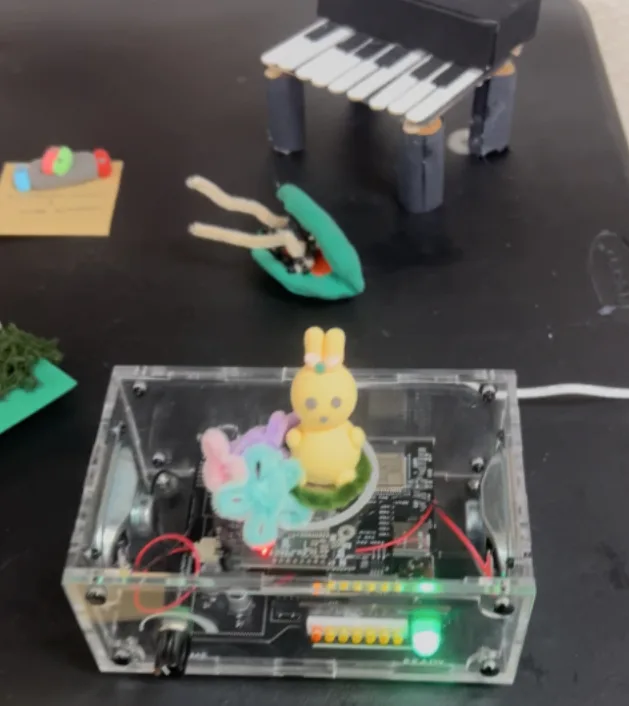
Special Collections & Archives (SCA) at the Z. Smith Reynolds Library at Wake Forest University engages in a variety of outreach, instruction, and exhibit- style interactions with faculty, staff, students, alumni throughout the year. After Rebecca May, Head of Public Services for Special Collections and Megan Mulder, Manager of Distinctive and Rare Materials attended the TechXploration presentation about Museum in a Box by Hannah Sloan and Brianna Healey, it occurred to them that acquiring a Museum in a box (or two) might be a great way to add some variety and interactions to their extensive collections based outreach, instruction, and exhibits.
This is their story.
SCA applied for, and was awarded, a ZSR Library Innovation Grant in September of 2025 for three Museum in a Box instances with the idea that we could use one for our main exhibit space in the Special Collections & Archives Research Room exhibit space, one for traveling outreach or other “swing” type events, and one for the Wake Forest Historical Museum in Wake Forest, North Carolina (this entity is under the direct supervision of Director of Special Collections & Archives, Tanya Zanish-Belcher). They arrived at the library in November of 2025, and we have begun to brainstorm how to use them and are excited for the possibilities.
What is it?
Museum in a Box is marketed as “a small, friendly, occasionally internet-connected, powered thing, and has speakers inside. When you place a museum object on it, an audio response will play.”
Essentially, it is an acrylic box with an NFT reader inside that will play an associated audio file, to the NFT sticker that is attached to a chosen object.
How does it work?
Collect, create scale versions, or make your own objects that will be part of your traveling museum. Objects no bigger than the palm of your hand, is a helpful parameter.
Gather or record audio files in .mp3 format, that will represent each object in your collection. Upload these files to your individual “museum in a box” admin website.
Connect your box to your local wi-fi network following the instructions in the box, so that the box can communicate with your uploaded files on your admin website.
Associate a different NFT sticker to each audio file, by clicking on that file and scanning the sticker on the box at the same time.
Attach each sticker with its object and place the object on top of the box to hear the audio play
Who is doing it?
Special Collections & Archives (SCA) will create representative images, 3 dimensional objects, or other materials that will be tagged with the NFC sticker. The pilot project we are currently working on is to complement the current exhibit “Reading the Revolution: Print Culture in 18th Century America.” Although still in the planning phase, the process will be: choose representative image or object to create a facsimile or 3-d printed item for visitors to interact with; write a script, find audio, or a combination of these for the audio clips for each item; record and edit any audio clips to go with the images or objects; design “postcards,” facsimiles, or 3-dimensional objects; print these items; attach the NFC sticker; organize backend spreadsheet and load content to the box; add to the Research Room for visitors to interact with the box and the representative images!
SCA is lucky enough to also have received $1,500 in donor funding for design and printing of the representative images and objects for the box. The labor we are concentrating on now is to identify what we want to highlight, create scripts or find audio, then record that. The process is front heavy for our staff, so we are hoping that the lull of an academic summer will give us the time we need to create the content.
Why is it significant?
I think this will be a significant shift in visitor experience and interaction with Special Collections & Archives materials. A museum, by design, is meant to display holdings to visitors. Libraries and Archives do not tend to have that intent within our mission, but the benefits of having this capability, if only on a small and selective scale, can have an enormous impact.
Our current exhibit space is small and very flat. We do our best to highlight our collections on a topic, but there are physical limitations that play into the visitor experience. We believe that the Museum in a Box will provide interactive opportunities to enhance the exhibit experience in our Research Room, but also allow those not physically in our space to interact with materials from Special Collections in an engaging and informative way. We see this as a potential tool in outreach, advancement and donor relations, instruction, and so many more ways!
What are the downsides?
The downside right now is time and capacity. We have the boxes, but curating the content, creating the audio, designing and producing the representative items, and then getting it all into the box proves to be a time consuming project that we hope to dedicate time over the summer. We are fortunate enough to have funding to support some of the design and printing process, but the content lies in the brains, imaginations, and free time of myself and a colleague to pilot our first foray into Museum in a Box in support of our current exhibit. The capacity we have to take on this project is low, so this may prove a barrier to completion.
Who is doing it?
Historically, several cultural heavyweights have pioneered the use of this platform. The Smithsonian Institution Libraries gained recognition for their Frogs in a Box project, which paired botanical postcards with archival field recordings. Other early adopters include the British Museum and the V&A. Additionally, the Royal Mint Museum in Wales deployed hundreds of boxes to care homes, utilizing them for tangible reminiscence therapy with elderly citizens.
Today, the technology is frequently employed by grassroots academic and decolonization collectives, such as the Amagugu Ethu collective in South Africa, to reclaim and narrate indigenous histories. Closer to home, institutions like the University of Richmond have established customized loan programs, featuring regional Civil Rights oral histories and geological specimens for use in local schools and seminars.
Where is it going?
The sky’s the limit! We have all sorts of fun ideas of what we can do with the Museum in a Box in the future. We can have classes use the box as their final project in classes, send the box on advancement trips with the ZSR Library Dean, create pop-up, travelling exhibits on a variety of topics, and so much more! We are excited for the myriad possibilities the box can take on.
What are the implications for higher education?
As a Special Collections & Archives at an Academic Library, we walk a fine line of access and preservation. We continue to expand our reach to classes, faculty research, and donor relations with the limitations needed to ensure preservation of our rare and unique materials. Having this Museum in a Box can break down some of the barriers traditional rules of archival and rare book handling has baked into access. Classes, faculty, and outside researchers can interact with, and design their own, facsimile interpretations of Special Collections & Archives materials in new and exciting ways.